The Ultimate Weeknight Tuna Casserole: A Quick & Delicious Family Dinner
The Evolution of Tuna Casserole in Family Dining
The weeknight tuna casserole is a definitive staple of modern family dining, offering the perfect intersection of convenience, affordability, and sheer comfort. Emerging in the mid-20th century as a clever way to utilize non-perishable pantry items, this dish has evolved from a simple post-war necessity into a highly customizable culinary canvas. Understanding the “why” behind its enduring popularity is key to mastering the dish.
At its core, a baked pasta dish provides immense psychological comfort. The combination of warm carbohydrates, rich umami flavors from the fish and savory sauce, and a contrasting textural crunch on top triggers a deeply satisfying sensory experience. Furthermore, relying on pantry staples like canned tuna and dried pasta means that a hearty, nutritionally balanced meal can be assembled on a Tuesday night with zero pre-planning.

Core Components of a Flawless Casserole
To upgrade this classic from a basic meal to a flagship dinner, one must deconstruct and optimize its core ingredients. Every element plays a crucial role in the final texture and flavor profile.
Selecting the Ideal Pasta
While traditional recipes call for wide egg noodles, the science of starch retention dictates that any pasta with a high surface area will work beautifully. Egg noodles are favored because their porous texture absorbs the creamy sauce effectively without becoming overly mushy. If substituting, opt for fusilli, cavatappi, or penne with ridges (rigate) to ensure the sauce clings to every bite.
The Protein Foundation: Choosing Your Tuna
Not all canned tuna is created equal. For a robust casserole, Solid White Albacore packed in water offers a firm, meaty texture that holds up to the baking process without disintegrating. However, Chunk Light tuna packed in olive oil can introduce a richer, more complex flavor profile. The secret is to drain the tuna thoroughly to prevent the casserole from becoming watery, while gently flaking it so distinct pieces remain visible in the final dish.

Step-by-Step Execution and Assembly
Proper execution is what separates a soggy, uninspired bake from a restaurant-quality casserole. Follow these detailed procedures to ensure structural integrity and maximum flavor.
Creating the Creamy Binder
The binder is the soul of the casserole. While canned condensed soup is the traditional shortcut, creating a quick homemade roux elevates the dish exponentially. Melt butter, whisk in flour to cook out the raw starch, and slowly incorporate whole milk and a rich chicken or vegetable broth. Simmer until thickened, and fold in sharp cheddar or gruyere cheese. This method avoids the artificial preservatives found in cans and allows for total control over the sodium levels.
Assembling and Baking
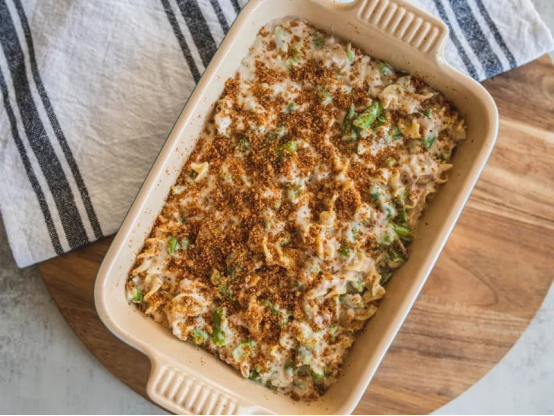
Layering is crucial. Toss your slightly undercooked pasta (al dente) with the flaked tuna, sweet green peas, and the warm cheese sauce. Transfer the mixture into a greased 9×13 baking dish. For the topping, bypass the traditional crushed potato chips and opt for a mixture of panko breadcrumbs, melted butter, and grated parmesan. Bake at 375 degrees Fahrenheit for 20-25 minutes until the edges are bubbling and the topping is deeply golden brown.
Pro Tips and Nutritional Upgrades
Transforming this classic recipe to fit modern dietary preferences is simple when you understand flavor mapping. Here is a technical checklist to elevate your next bake:
- Always undercook your pasta by 2 minutes during the boiling phase; it will continue to cook in the oven.
- Add a splash of fresh lemon juice or a teaspoon of Dijon mustard to the sauce to cut through the richness and brighten the dish.
- Fold in fresh spinach or diced bell peppers during the assembly phase to increase the vegetable density.
| Traditional Ingredient | Healthy Modern Swap |
|---|---|
| Canned Cream of Mushroom Soup | Homemade Greek Yogurt & Mushroom Roux |
| Standard Egg Noodles | Whole Wheat, Lentil, or Chickpea Pasta |
| Crushed Potato Chips Topping | Toasted Whole Grain Panko with Parmesan |
| Whole Milk | Unsweetened Oat Milk or Almond Milk |
Frequently Asked Questions (FAQ)
- Can I make this tuna casserole ahead of time?
- Yes, you can assemble the entire casserole up to 24 hours in advance. Keep it tightly covered in the refrigerator. To maintain the crucial textural contrast, do not add the crunchy breadcrumb topping until immediately before placing the dish in the oven.
- What is the best way to store and reheat leftovers?
- Store any leftover casserole in an airtight container in the refrigerator for up to 3 days. To reheat, microwave individual portions in 30-second intervals, or place the entire dish back in the oven at 350°F (covered in foil) until warmed through to prevent the pasta from drying out.
- Can I freeze tuna casserole?
- Absolutely. Tuna casserole freezes exceptionally well. Wrap the unbaked, assembled casserole tightly in plastic wrap followed by a layer of aluminum foil. It can be frozen for up to 3 months. Thaw overnight in the refrigerator before baking as directed.
- How can I make this recipe dairy-free?
- To achieve a rich, dairy-free casserole, substitute the traditional cream soup or milk with a high-quality plant-based alternative like unsweetened oat milk or cashew cream. Use a dairy-free cheese alternative or a sprinkle of nutritional yeast to replicate the savory, cheesy flavor profile.