Mastering Global Breakfast Classics: A Comprehensive Guide
Breakfast is often heralded as the most important meal of the day, serving as a culinary canvas where culture, nutrition, and comfort intersect. From the sweet, milk-soaked layers of European-inspired French toast to the meticulous structural integrity of a Japanese omelet, global breakfast classics offer a diverse range of flavors and techniques. This guide synthesizes the finest elements of these traditions, providing a roadmap for creating professional-grade morning meals that elevate the domestic dining experience to a gourmet level.
The Art of Aromatic French Toast: Fruit and Milk Synthesis
French toast, known in various cultures as “pain perdu,” is a masterclass in texture management. The fundamental principle involves the rehydration of bread using a custard-based soak, followed by the Maillard reaction during frying to create a crisp exterior. When fruit—specifically blueberries—and high-quality milk are introduced, the dish transforms from a simple staple into a sophisticated “encounter between fruit and milk.”
The Science of the Custard Soak
The success of French toast depends entirely on the ratio of eggs to milk. A mixture that is too heavy on eggs will result in a “rubbery” texture, while too much milk can make the bread structurally unsound. To achieve the “taste of happiness” on your breakfast table, use a ratio of two large eggs for every half-cup of whole milk. Incorporating aromatics like vanilla bean or cinnamon into the liquid phase ensures that the flavor permeates the entire slice of bread, not just the surface.
- Bread Selection: Opt for thick-cut brioche or challah. These breads have a high fat content and a tight crumb structure, allowing them to absorb the custard without disintegrating.
- Blueberry Integration: Rather than just topping the toast, consider a blueberry reduction. Simmer fresh blueberries with a touch of sugar and lemon juice until the pectin sets, creating a jam-like consistency that cuts through the richness of the milk and eggs.
- The Frying Phase: Use a combination of butter and a neutral oil. The oil raises the smoke point, preventing the butter from burning while still providing that signature nutty flavor.

Mastering the Japanese Thick Omelet with Seaweed and Ham
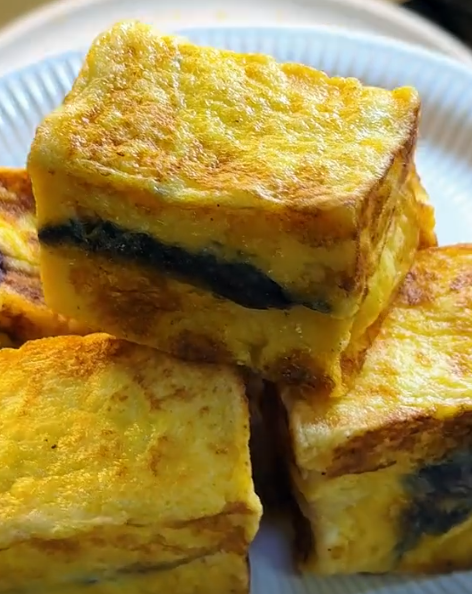
For those who prefer a savory start to their day, the Japanese thick omelet, or Tamagoyaki, represents the pinnacle of egg cookery. Unlike the French omelet, which focuses on a smooth, pale exterior and a creamy interior, the Japanese version is built through a series of thin, rolled layers. This creates a dense, “thick” texture that is both satisfying and visually stunning.
The Secret of Layered Construction
The inclusion of seaweed (nori) and ham introduces a complex umami profile and a textural contrast that is a “must-try for Japanese cuisine lovers.” The process requires a rectangular pan (makiyakinabe) to ensure uniform thickness and ease of rolling. Each layer must be seasoned delicately with dashi, soy sauce, and a hint of sugar to achieve the authentic savory-sweet balance.
| Ingredient | Function in the Omelet | Pro Tip |
|---|---|---|
| Eggs | Structural Base | Strain the eggs through a fine-mesh sieve for a perfectly smooth texture. |
| Seaweed (Nori) | Umami & Visual Contrast | Place the nori sheet between layers to create a beautiful spiral effect when sliced. |
| Diced Ham | Salt & Protein | Ensure the ham is finely minced so it doesn’t tear the thin egg layers during rolling. |
| Dashi | Flavor Depth | Use high-quality kelp and bonito stock for an authentic Japanese profile. |

The Irresistible Charm of Fluffy American Pancakes
American pancakes are defined by their “simple yet delicious” nature. The goal is to achieve maximum lift and a tender crumb. This is achieved through a chemical reaction between leavening agents and acids. While many rely on pre-made mixes, a scratch-made pancake offers superior control over sweetness and density.
Optimizing the Leavening Process
The “irresistible charm” of a pancake lies in its fluffiness. To achieve this, one must understand the interaction between baking powder and buttermilk. The acid in the buttermilk reacts with the sodium bicarbonate in the baking powder, producing carbon dioxide bubbles that get trapped in the gluten structure of the batter. This creates the characteristic “rise” that defines a classic American pancake.
- Mixing Technique: Never overmix the batter. Lumps are your friend. Overmixing develops gluten, which leads to tough, chewy pancakes rather than light, airy ones.
- Temperature Control: The griddle should be at a consistent 375°F (190°C). If the pan is too hot, the exterior will burn before the interior is cooked. If it is too cool, the pancake will be flat and greasy.
- The Flip: Wait for bubbles to form and pop on the surface of the batter before flipping. This indicates that the bottom has set and the internal structure is stable.

Advanced Breakfast Strategies: Flavor Balancing and Plating
To transition from a home cook to a breakfast architect, one must consider the holistic experience of the meal. This involves balancing flavors (sweet, salty, acidic, and bitter) and ensuring that the visual presentation matches the culinary quality. Whether you are serving French toast or a Japanese omelet, the “happiness” of the meal is often found in the details.
Synergistic Flavor Pairings
Consider the interplay between your main dish and its accompaniments. A rich, sweet blueberry French toast benefits from a side of crispy, salty bacon or a sharp, acidic fruit salad. Conversely, the savory Tamagoyaki is best paired with a bowl of steamed rice and a light miso soup to balance the density of the egg layers. In the case of American pancakes, a high-quality maple syrup provides the necessary moisture and a complex sweetness that honey or corn syrup cannot replicate.
Professional Plating Tips: Use warm plates to ensure the food stays at the optimal temperature. For French toast, dust with a fine layer of powdered sugar just before serving to add visual “pop.” For the Japanese omelet, use a sharp knife to slice the roll into even pieces, revealing the internal layers of seaweed and ham.
Frequently Asked Questions (FAQ)
- Q1: Why does my French toast always turn out soggy in the middle?
- Sogginess is usually the result of using bread that is too fresh or soaking it for too long. Use “stale” or slightly dried-out bread, and ensure you are using a thick-cut slice. Additionally, finishing the toast in a low oven (300°F) for 5 minutes after pan-frying can help set the center custard.
- Q2: Can I make the Japanese omelet without a rectangular pan?
- Yes, you can use a standard round non-stick skillet. However, you will need to fold the sides in to create a rectangular shape before rolling. The ends will be less uniform, but the flavor and texture will remain the same.
- Q3: What is the secret to getting “tall” American pancakes?
- The secret is a combination of fresh baking powder and letting the batter rest for at least 10 minutes before cooking. Resting allows the flour to fully hydrate and the leavening agents to begin their initial reaction, resulting in a better rise on the griddle.
- Q4: How do I prevent the blueberry jam from bleeding into the French toast?
- If you want a clean presentation, serve the blueberry jam on the side or as a concentrated dollop on top rather than mixing it into the egg custard. Using a thickened blueberry reduction (simmered until thick) also prevents the juice from running.
- Q5: What is the best way to reheat these breakfast items?
- To maintain texture, use a toaster oven or a standard oven at 350°F. Microwaving tends to make pancakes and French toast rubbery and can make the Japanese omelet tough. Covering with foil during reheating helps retain moisture without making the exterior soggy.