The Ultimate Guide to Creamy Vegetarian Risotto: From Classic Mushroom to Roasted Cauliflower
Risotto is the heart of Italian comfort cooking, a dish that transforms simple grains of rice into a luxuriously creamy and deeply satisfying meal. While often associated with chicken broth or rich meats, vegetarian risotto stands as a testament to the power of technique and quality ingredients. It’s a versatile canvas for seasonal produce, capable of delivering a silky, flavor-packed experience that rivals any of its non-vegetarian counterparts. This guide will walk you through the essential principles of risotto making, providing detailed recipes for both a timeless creamy mushroom version and a modern, sophisticated roasted cauliflower star.
The Foundation of Perfect Vegetarian Risotto
Before diving into specific recipes, understanding the core components and techniques is crucial. The magic of risotto lies not in a single secret ingredient, but in a series of deliberate steps that work in harmony to build texture and flavor. Mastering these fundamentals will empower you to create exceptional risotto with any ingredients you choose.
Choosing the Right Rice
The type of rice is non-negotiable for authentic risotto. You need a short to medium-grain Italian white rice with a high starch content, specifically amylopectin. This starch is what releases during the cooking process, creating the signature creamy sauce that binds the dish together. The goal is to cook the rice until it is al dente—tender on the outside with a slight bite in the center.
- Arborio: The most widely available and forgiving risotto rice. It produces a very creamy, hearty risotto.
- Carnaroli: Often called the “king” of risotto rice by chefs. Its grains are longer and hold their shape better, resulting in a slightly firmer texture and an exceptionally creamy sauce. It is more resistant to overcooking.
- Vialone Nano: Popular in the Veneto region, this rice cooks faster and absorbs liquid readily, creating a wonderfully soft and creamy final product.
The Essential Role of a Flavorful Broth
In vegetarian risotto, the vegetable broth is not a background player; it is the primary source of deep, savory flavor. A weak or bland broth will result in a flat-tasting dish. Always use a high-quality, rich vegetable broth. For the best results, make your own by simmering mirepoix (onions, carrots, celery) with mushroom stems, parsley, and bay leaves. Crucially, the broth must be kept at a simmer in a separate pot throughout the cooking process. Adding cold broth to the hot rice will shock the grains and hinder the starch-release process.
Aromatics: The Base Layer of Flavor
Nearly every great risotto begins with a soffritto—a gentle sauté of aromatics in fat. This step builds the foundational flavor profile. Finely chopped onion or shallots are the classic choice, cooked slowly in olive oil or butter until they are soft, translucent, and sweet, but not browned. Minced garlic is often added in the last minute of cooking the soffritto to prevent it from burning and turning bitter.

Mastering the Classic: Creamy Mushroom Risotto
This is the quintessential vegetarian risotto, a celebration of earthy, umami-rich mushrooms transformed into a silky, decadent meal. The key is to build layers of mushroom flavor by using a variety of mushrooms and cooking them properly to concentrate their taste.
Step-by-Step Recipe Breakdown
This recipe serves approximately 4 people and captures the essence of Italian tradition.
| Ingredient | Quantity |
|---|---|
| Arborio or Carnaroli Rice | 1.5 cups (300g) |
| Mixed Mushrooms (Cremini, Shiitake, Portobello) | 1 lb (450g), sliced |
| Vegetable Broth | 6 cups, simmering |
| Dry White Wine (e.g., Pinot Grigio) | 1/2 cup |
| Yellow Onion | 1, finely chopped |
| Garlic | 2 cloves, minced |
| Butter or Olive Oil | 4 tablespoons, divided |
| Vegetarian Parmesan-style Cheese | 1/2 cup, grated |
| Fresh Parsley | 1/4 cup, chopped |
| Salt and Black Pepper | To taste |
Cooking Instructions and Technique
Follow these steps meticulously for a perfect result. The process requires about 25-30 minutes of active attention.
- Cook the Mushrooms: In a large skillet, melt 2 tablespoons of butter over medium-high heat. Add the sliced mushrooms and cook, stirring occasionally, until they have released their liquid and are beautifully browned. This concentrates their flavor. Season with salt and pepper, remove from the skillet, and set aside.
- Start the Soffritto: In the same skillet (or a heavy-bottomed pot), add the remaining 2 tablespoons of butter. Sauté the finely chopped onion over medium heat until soft and translucent, about 5-7 minutes. Add the minced garlic and cook for another minute until fragrant.
- Toast the Rice (Tostatura): Add the risotto rice to the pot. Stir constantly for about 2 minutes, ensuring every grain is coated in fat. The grains should become slightly translucent around the edges with a white, opaque center. This toasting step is vital for helping the grains retain their shape.
- Deglaze and Add Broth: Pour in the white wine to deglaze the pan, scraping up any browned bits from the bottom. Let the wine cook off completely. Once absorbed, add one ladle of the simmering vegetable broth.
- The Stirring Process: Stir the rice constantly but gently until the broth is almost fully absorbed. Once it is, add another ladle of broth. Continue this process—adding a ladle of broth and stirring until absorbed—for about 18-25 minutes. This continuous agitation is what coaxes the starch from the rice to create the creamy sauce.
- Finish the Risotto (Mantecatura): When the rice is al dente, stir in the cooked mushrooms, the grated vegetarian Parmesan, and the chopped parsley. Remove from the heat. The texture should be fluid and creamy, not stiff or dry. Check for seasoning and adjust with salt and pepper. Let it rest for a minute before serving immediately.

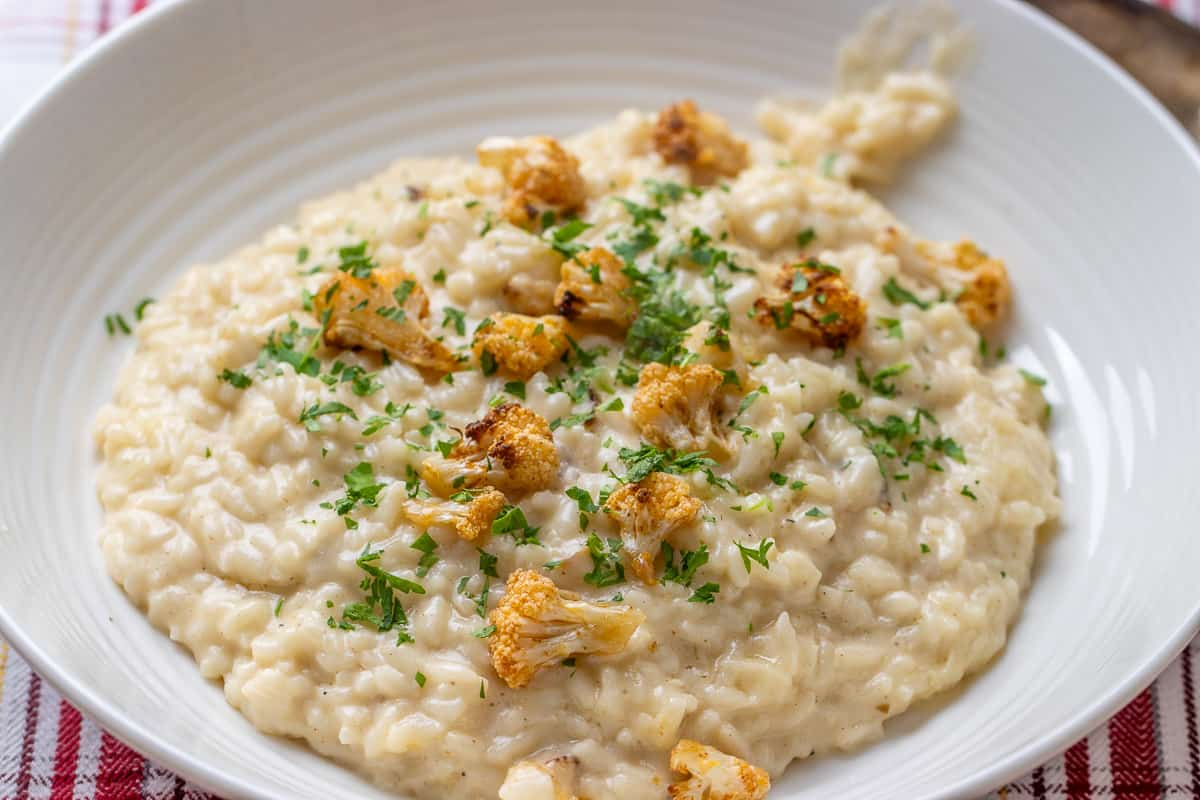
A Modern Twist: Roasted Cauliflower Risotto
This variation elevates the humble cauliflower into a culinary star. Roasting the cauliflower before adding it to the risotto creates a deep, nutty, and slightly sweet flavor that perfectly complements the creamy rice. It’s a sophisticated and surprisingly delicious take on the classic.
Why Roasting Cauliflower Changes Everything
Raw or boiled cauliflower can be bland and watery. The high, dry heat of roasting initiates the Maillard reaction, a chemical process that browns the vegetable and creates hundreds of new aromatic compounds. This results in a complex flavor profile that adds incredible depth to the risotto, making it taste rich and complex without any heavy ingredients.
Detailed Cooking Instructions
The base risotto technique remains the same, with the addition of the roasted cauliflower step.
- Prepare the Cauliflower: Preheat your oven to 425°F (220°C). Chop a medium head of cauliflower into small, bite-sized florets. Toss them on a baking sheet with 2 tablespoons of olive oil, salt, pepper, and a pinch of nutmeg or smoked paprika. Roast for 20-25 minutes, or until tender and deeply golden brown on the edges.
- Make the Risotto Base: Follow steps 2-5 from the mushroom risotto recipe (soffritto, toasting rice, deglazing, adding broth).
- Incorporate the Cauliflower: When the risotto has been cooking for about 15 minutes and is nearing the al dente stage, stir in about three-quarters of the roasted cauliflower florets. Continue cooking with the final ladles of broth.
- Finish and Garnish: Once the rice is perfectly cooked, finish the risotto with vegetarian Parmesan cheese (the mantecatura). Serve immediately in warm bowls, garnished with the remaining roasted cauliflower florets and a sprinkle of fresh thyme or chives for color and freshness.

Advanced Techniques and Flavor Variations
Once you’ve mastered the basic recipes, you can begin to experiment and customize your risotto. These techniques and ideas will help you troubleshoot common issues and explore new flavor combinations.
Troubleshooting Common Risotto Problems
Even experienced cooks can run into issues. Here’s how to solve the most common risotto challenges.
- Gummy or Mushy Risotto: This is usually caused by overcooking the rice or stirring too vigorously, which breaks the grains. Cook only until al dente and use a gentle, consistent stirring motion.
- Hard or Chalky Center: This means the rice is undercooked. You may need to add another ladle or two of broth and continue cooking for a few more minutes. It can also happen if your cooking heat is too high, causing the liquid to evaporate before it can be absorbed.
- Lack of Creaminess: This can result from several factors: using the wrong type of rice, not toasting the rice properly, adding cold broth, or not stirring enough. Ensure all foundational steps are followed correctly.
Incorporating Other Seasonal Vegetables
Risotto is an excellent vehicle for showcasing seasonal produce. The key is to know when and how to add different vegetables based on their cooking time.
- Hard Vegetables: Ingredients like butternut squash or carrots should be diced small and either roasted separately (like the cauliflower) or added early in the cooking process with the onions.
- Tender Greens: Spinach, arugula, or kale should be stirred in at the very end, as they will wilt from the residual heat of the risotto in just a minute.
- Green Vegetables: Asparagus or peas should be blanched and added during the last 5 minutes of cooking to retain their vibrant color and crisp-tender texture.
Frequently Asked Questions (FAQ)
- Q1: What is the best vegetarian substitute for Parmesan cheese?
- The best substitute is a high-quality, pre-made vegetarian Parmesan-style hard cheese, which uses microbial rennet instead of animal rennet. For a dairy-free option, nutritional yeast provides a cheesy, nutty, umami flavor. A paste made from cashews, nutritional yeast, and a little lemon juice can also add creaminess and a cheese-like tang.
- Q2: Can I make risotto ahead of time?
- Authentic risotto is best served immediately. However, you can par-cook it. Follow the recipe until the rice is about halfway cooked (still quite hard in the center). Spread it on a baking sheet to cool quickly. When ready to serve, reheat it in a pan, and resume adding simmering broth and stirring until it’s perfectly al dente. Finish with the cheese and butter as usual.
- Q3: Why is my risotto not creamy enough?
- The most common reasons are using the wrong rice (like long-grain), not stirring frequently enough to release the starches, or adding the broth all at once instead of ladle by ladle. Ensure you are using Arborio, Carnaroli, or Vialone Nano rice and are following the patient, gradual process of adding simmering broth and stirring until it’s absorbed.
- Q4: How do I know when the risotto is perfectly cooked?
- The perfect risotto is cooked “al dente,” meaning it’s soft on the outside but still has a slight bite or firmness in the very center of the grain. The overall texture should be creamy and fluid, like a thick porridge. It should spread gently when spooned onto a plate, not hold a stiff shape. The best way to know is to taste it frequently during the last few minutes of cooking.