Global Culinary Journeys: A Master Guide to World Food Heritage
Gastronomy is the ultimate vessel for human history. Every spice blend, cooking technique, and regional delicacy tells a profound story of migration, imperial conquest, geographical adaptation, and cultural resilience. This comprehensive pillar guide takes you on a meticulously curated global culinary journey. We will dissect the multi-course royal feasts of the Indian subcontinent, decode the immigrant nostalgia baked into South American street food, and brave the extreme climates of Siberia to uncover how humanity thrives through flavor.
The Subcontinental Spice Route: Mughal Feasts and Colonial Sweets
The Indian subcontinent is a theater of intense culinary evolution, where centuries of royal patronage and colonial encounters have birthed some of the world’s most complex flavor profiles. The legacy of the Mughal Empire, characterized by its opulent use of aromatics, nuts, and slow-cooking techniques, continues to dominate the food landscapes of Kashmir and Lahore, while the Bengal region offers a sweet testament to its colonial past.
The Feast of Wazwan: Kashmir’s Copper Plate Marvel
In the breathtaking valleys of Kashmir, dining is elevated to a spiritual and communal art form known as the Wazwan. This is not merely a meal; it is a meticulously choreographed 36-course banquet that reflects the zenith of Kashmiri hospitality and Mughal influence. Served under the metaphorical moonlight and crisp valley winds, the Wazwan is traditionally eaten from a large, intricately carved communal copper plate called a Trami.
The preparation is entrusted to a master chef, the Vasta Waza, who oversees the overnight pounding of meat and the precise blending of indigenous spices like saffron, fennel, and dried ginger. The sequence of dishes is strictly traditional, designed to progressively awaken the palate:
- Seekh Kababs and Tabak Maaz: The feast commences with grilled minced meat skewers and glossy, ghee-fried lamb ribs that offer a textural contrast of crispy exterior and tender meat.
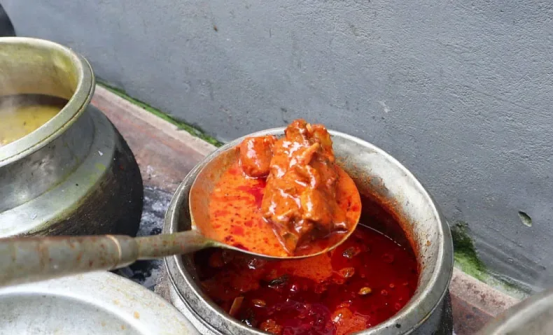
- Rogan Josh: A signature dish where lamb is braised in a fiery red gravy, deriving its vibrant color from the native Kashmiri chili and alkanet root (ratan jot), completely devoid of tomatoes.
- Rista and Gushtaba: The climax of the Wazwan features spongy, hand-pounded mutton meatballs. Rista is served in a vibrant paprika-infused broth, while Gushtaba arrives in a velvety, tangy yogurt sauce, signaling the conclusion of the savory courses.
Lahore’s Culinary Fireworks: Savoring the Mughal Legacy
Traveling westward to Lahore, Pakistan, the Mughal culinary legacy transforms into a vibrant, high-energy street food culture. Lahore is a city where history is consumed daily amidst the smoke of charcoal grills and the rhythmic clanging of spatulas on iron griddles. The walled city and the famous Gawalmandi Food Street offer a sensory explosion—a literal firework display of spices and history.
Lahori cuisine is distinguished by its robust, unpretentious, and deeply satisfying nature. The historic architecture serves as a backdrop to centuries-old recipes that have been fiercely guarded by local families. Essential Lahori culinary experiences include:
- Nihari: A slow-cooked beef or lamb shank stew, simmered overnight with bone marrow and a proprietary blend of dozens of spices, traditionally eaten at dawn.
- Tawa Chicken: Marinated chicken pieces flash-fried on a massive convex iron griddle, infused with green chilies, ginger, and a heavy dose of black pepper.
- Siri Paye: A gelatinous, rich curry made from the trotters and head of a goat or cow, representing the ultimate comfort food for the city’s inhabitants.
Ladikenny: Bengal’s Colonial Sweet Heritage
In stark contrast to the savory depths of the Mughal empire, the Bengal region’s culinary narrative is heavily defined by its confectionery brilliance and colonial history. The Ladikenny (or Lady Kenny) is a prime example of culinary adaptation. Named after Lady Charlotte Canning, the wife of Lord Charles Canning (the Governor-General of India during the 1857 uprising), this dessert is a fascinating piece of edible history.
Created by the legendary Bengali confectioner Bhim Chandra Nag to honor Lady Canning’s visit, the Ladikenny is a cylindrical, deep-fried sweet made from chhena (curdled milk cheese) and semolina. While it shares a visual resemblance to the ubiquitous Gulab Jamun, its texture is distinctly different—featuring a slightly firmer, caramelized outer shell that gives way to a porous, syrup-soaked interior, often studded with cardamom seeds or raisins. It stands as a sweet monument to the complex cultural synthesis of colonial India.

South American Gastronomy: Immigrant Roots and Geographic Extremes
South America offers a dramatic culinary dichotomy. On one side, you have the bustling, European-influenced metropolises where immigrant nostalgia has birthed entirely new food categories. On the other, you have vast, untamed landscapes that dictate the ingredients and cooking methods of the indigenous and local populations.
Buenos Aires Pizza World: Italian Nostalgia in Cheese and Fireworks
To understand the pizza of Buenos Aires is to understand the soul of the Argentine capital. In the late 19th and early 20th centuries, a massive wave of Italian immigrants arrived in Argentina, bringing with them their culinary traditions. However, due to the abundance of local dairy and wheat, the traditional Neapolitan pizza evolved into something entirely unique, characterized by its sheer decadence and volume.
Buenos Aires pizza is defined by a thick, spongy crust (media masa) designed to support an overwhelming, almost chaotic amount of mozzarella cheese that spills over the edges and caramelizes against the pan. The dining experience in historic pizzerias along Corrientes Avenue is loud, fast-paced, and deeply nostalgic. Key variations include:
- Fugazzeta: A majestic, cheese-stuffed deep-dish pizza topped with a mountain of sweet, thinly sliced onions and a dusting of oregano. It is a masterclass in savory indulgence.
- Fainá: A dense, peppery chickpea flatbread of Genoese origin, traditionally served directly on top of a slice of pizza—a practice known as eating a caballo (on horseback).
Chile’s Culinary Tour: A Fusion of Desert, Mountains, and Ocean
Chile’s impossible geography—a narrow strip of land sandwiched between the towering Andes and the vast Pacific Ocean, capped by the arid Atacama Desert to the north and glacial fields to the south—creates a hyper-diverse culinary ecosystem. A culinary tour of Chile is essentially an exploration of microclimates.
| Geographic Region | Culinary Characteristics | Iconic Delicacies |
|---|---|---|
| The Atacama Desert (North) | Focuses on hardy indigenous ingredients that survive extreme aridity. High mineral content in the soil imparts unique flavors. | Rica-rica herb infusions, quinoa-based stews, and llama meat preparations. |
| The Andes Mountains (Central) | Hearty, agriculturally driven comfort foods designed to sustain workers in cooler, high-altitude climates. | Pastel de Choclo (a sweet corn and meat pie) and Cazuela (a restorative beef, pumpkin, and potato broth). |
| The Pacific Coast (Entire Length) | An unparalleled bounty of cold-water seafood, driven by the nutrient-rich Humboldt Current. | Caldillo de Congrio (conger eel soup, famously immortalized by poet Pablo Neruda), sea urchins, and razor clams. |

Mediterranean and North African Tapestries: Time-Honored Flavors
The Mediterranean basin and the fringes of the Sahara Desert have been the crossroads of human civilization for millennia. The cuisines here are deeply tied to the rhythms of the earth, the olive harvest, the spice trade, and the slow passage of time.
36 Hours in Athens: Savoring Time Through Ancient Monuments
Athens is a city where antiquity and modernity sit side-by-side, and its food scene perfectly reflects this duality. A 36-hour culinary immersion in Athens requires surrendering to the Greek concept of siga-siga (slowly-slowly). Meals are prolonged affairs, woven seamlessly into the fabric of daily social life against the backdrop of the Acropolis.
The foundation of Athenian cuisine is liquid gold: extra virgin olive oil. It pools around blocks of feta, dresses vibrant tomatoes in a classic Horiatiki (Greek salad), and is essential for frying the perfect Saganaki (flaming cheese). Street food is equally historic, with the iconic Souvlaki—succulent skewers of pork or chicken wrapped in a warm, oiled pita with tzatziki, onions, and fries—serving as the ultimate fuel for exploring the ancient ruins of the Plaka and Monastiraki neighborhoods.
Marrakech Food Tour: Discover the Authentic Taste of Morocco
Crossing the Mediterranean into North Africa, Marrakech offers a dizzying, aromatic maze of culinary discovery. The heart of the city’s food culture beats in the vibrant souks and the legendary Jemaa el-Fnaa square, which transforms into a massive open-air restaurant at dusk.
Moroccan cuisine is a masterclass in the balance of sweet and savory. The quintessential experience is the Tagine, named after the conical clay pot in which it is cooked. The unique shape of the lid traps steam, returning moisture to the slow-cooking meats and vegetables, resulting in unparalleled tenderness. A traditional lamb tagine is often braised with prunes, toasted almonds, and a complex spice blend known as Ras el Hanout, which can contain up to 30 different spices. The meal is invariably concluded with the ritualistic pouring of sweet Maghrebi mint tea, served from a height to create a frothy crown.

The Siberian Extreme: Must-Try Delicacies of Lake Baikal
For the truly adventurous gastronomic traveler, the frozen expanses of Siberia offer culinary traditions born out of absolute necessity and extreme environmental conditions. Lake Baikal, the deepest and oldest freshwater lake in the world, is home to a unique ecosystem that provides the indigenous Buryat people and local Siberians with remarkable ingredients.
Surviving and Thriving: Traditional Baikal Foods
Food around Lake Baikal is highly caloric, incredibly fresh, and deeply reliant on foraging, fishing, and traditional preservation methods to survive the brutal winters.
- Omul Fish: The undisputed king of Baikal cuisine is the Omul, an endemic species of whitefish. It is consumed in multiple ways: Sagudai is a raw fish salad marinated in oil, vinegar, onions, and salt, highlighting the pristine freshness of the catch. Alternatively, hot-smoked Omul, sold by babushkas along the lake’s shores, offers a rich, woody, and intensely savory flavor profile.
- Buryat Buuza: A cornerstone of the indigenous Buryat diet, these are large, steamed dumplings shaped like traditional yurts. They are filled with coarsely minced beef, pork, or mutton, and a rich, fatty broth. The correct way to eat a Buuza is to bite a small hole in the dough, suck out the hot, savory juices, and then consume the rest of the dumpling.
- Pine Nut Delicacies: The surrounding taiga forests provide an abundance of Siberian pine nuts, which are used to make dense, energy-rich brittle, infused honey, and even traditional medicinal tinctures.

Strategic Blueprint for Planning a Global Culinary Expedition
Embarking on a global culinary journey requires more than just a passport and a healthy appetite. To truly engage with the deep historical and cultural roots of the dishes mentioned above, travelers must adopt a strategic approach to food tourism.
Essential Tips for Food Travelers
To maximize your culinary experiences while maintaining health and cultural respect, implement the following advanced travel strategies:
- Follow the Local Rhythms: Do not force your home dining schedule onto a foreign culture. In Buenos Aires, dinner begins well after 9:00 PM. In Athens, a mid-afternoon coffee and meze session is mandatory. Adapting your internal clock ensures you eat freshly prepared food alongside locals, rather than reheated meals in empty tourist traps.
- Master the Art of Street Food Safety: The best food is often found on the street, from Lahori Tawa Chicken to Marrakech’s snail soups. Ensure safety by choosing stalls with high turnover rates and long lines of locals. Observe the cooking process: high, sustained heat (like boiling broths or roaring charcoal grills) is your best defense against foodborne illness.
- Engage with the Culinary Storytellers: Food is deeply personal. Take the time to ask the Vasta Waza in Kashmir about his spice blends, or inquire about the specific wood used to smoke your Baikal Omul. Showing genuine interest transcends language barriers and often results in off-menu tastings and deeper cultural connections.
Frequently Asked Questions (FAQ)
- What is the best time of year to experience the Wazwan in Kashmir?
- The most authentic Wazwan feasts are prepared during the traditional Kashmiri wedding season, which typically peaks between late summer and autumn (August to October). The weather is pleasant, the valley winds are crisp, and the harvest provides the freshest ingredients for the master chefs.
- Is Buenos Aires pizza suitable for vegetarians?
- Absolutely. In fact, one of the most iconic and beloved Buenos Aires pizzas, the Fugazzeta, is entirely vegetarian, consisting only of thick dough, massive amounts of mozzarella cheese, sweet onions, and oregano. The chickpea Fainá is also a staple vegetarian accompaniment.
- How spicy is the street food in Lahore?
- Lahori street food is known for its robust and intense flavor profiles, which heavily utilize black pepper, green chilies, and complex garam masala blends. It is generally quite spicy. However, if you are sensitive to heat, you can request dishes to be made “halka masala” (mild spices), though some slow-cooked stews like Nihari have a fixed spice level.
- What is the cultural significance of the Moroccan Tagine?
- The Tagine represents the communal nature of Moroccan dining. It is both the cooking vessel and the serving dish. Families and guests gather around a single tagine, using pieces of fresh bread (Khobz) to scoop up the meat and rich sauces, symbolizing unity, sharing, and hospitality.
- Can I find Lake Baikal Omul anywhere else in Russia?
- Authentic, wild-caught Baikal Omul is strictly endemic to Lake Baikal. While you may find vacuum-sealed or heavily processed versions in specialty stores in Moscow or St. Petersburg, the true experience of eating fresh Sagudai or freshly hot-smoked Omul can only be had on the shores of the lake itself.
- 0
- By finet52
- April 17, 2026 12:18 PM