French Luxury: A Guide to the History, Production, and Tasting of Goose Liver
Hey foodies! You know that super fancy French food, goose liver or foie gras? I’ve always been curious about it. So, I decided to find out everything I could. It’s been an eye-opening adventure!
A Super Long History
Foie gras has been around for ages. It all started over 4,500 years ago in ancient Egypt. People there forced geese to eat a lot so their livers would get fat. You can even see this in Egyptian hieroglyphs. From Egypt, this way of making fatty liver spread along trade routes and ended up in Roman Gaul.
The Romans, who loved all things luxurious, took this idea and made it their own. They fed figs to geese to make their livers bigger. They called the dish “iecur ficatum.”. It became a symbol of their rich and fancy lifestyle. Emperors and rich people just loved it.
Then came the Middle Ages. Foie gras was really popular among European nobles. It was served at all those fancy feasts. In France, especially in the southwestern regions like the Périgord area, it became part of the local cooking. The Périgord region, with its great land and food history, became super important for making foie gras. They had special ways to make it, and it tasted amazing with local wines and cheeses.
How They Make It
Today, France is the biggest producer and consumer of foie gras. About 30,000 people work in this industry in France. Most of them are in the southwestern and eastern parts of the country. The EU even protects the foie gras made the traditional way in southwestern France.
Now, let’s talk about how they make it. In the past, they mostly used special breeds of geese. But these days, they use ducks more often. In 2014, ducks made up 95% of the foie gras production. They use breeds like the Muscovy duck and the Mulard duck, which is a mix of a male Muscovy and a female Pekin duck.
The process of making foie gras is a bit complicated. First, there’s a pre-feeding phase. The birds are raised in different ways during this time. They start in big indoor groups, then they go outside to eat grass. Finally, they’re brought back inside and given a high-starch diet.
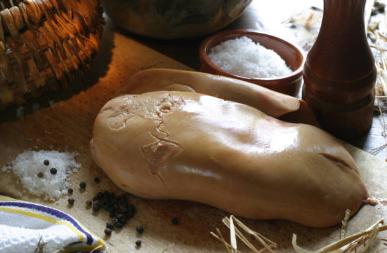
Then comes the feeding phase. This is the part that causes a lot of arguments. They force-feed the birds. Ducks are fed twice a day for about 10 – 12 days. Geese are fed three times a day for 15-18 days. They use a funnel with a long tube to push food, usually corn cooked with fat, into the bird’s esophagus. This makes the liver get really fat, about 6 to 10 times its normal size. After that, the ducks are usually killed around 100 days old, and geese at 112 days old.
Because people are worried about animal welfare, there are some other ways to make something like foie gras. In Spain, some producers wait for the birds’ livers to get fat naturally during their winter migration. In the UK, Waitrose sells a product called “faux gras” made from free-range goose or duck liver and extra fat. There are also other ideas, like using probiotics to make the liver fatty without force-feeding.
Different Forms and How to Eat It
In France, foie gras comes in different forms. There’s the whole foie gras, which can be cooked, semi-cooked, or fresh. Then there are pieces of livers put together and a block made mostly of foie gras. There are also foie gras pâté, mousse, and parfait. Each has different amounts of real foie gras in them, according to the law.
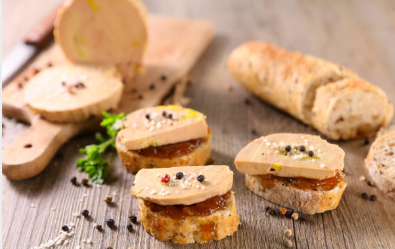
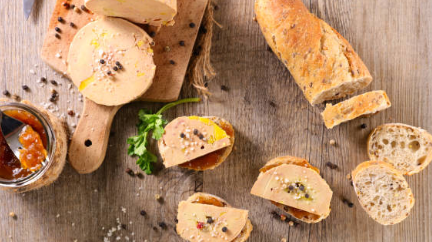
When it comes to eating foie gras, there are two main ways. You can have it cold or hot. For cold preparations, they use low-heat cooking to make things like terrines, pâtés, and mousses. They might add truffles, mushrooms, or brandy to make it taste better. One really traditional way is to wrap the whole lobe of foie gras in a towel and cook it slowly in a water bath. Sometimes, they sear it a bit first over a fire of grapevine clippings for more flavor. Then they press it and serve it cold in slices. You can also cure raw foie gras in salt and eat it a bit cold.
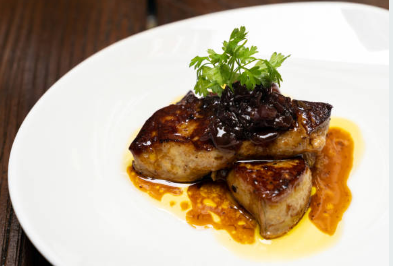
For hot preparations, duck foie gras is better for high-temperature cooking because it has a bit less fat. You can roast, sauté, or pan-sear it. It needs to be cooked quickly at a high temperature because it has so much fat. Some chefs like to keep the veins in to help the liver stay together. And some even just sear one side. Molecular gastronomy chefs might flash-freeze it in liquid nitrogen first. When cooking it hot, you just need a little bit of black pepper, paprika (in Hungary), and salt. Some chefs use fleur de sel to add a nice crunch.
Its Place in French Culture
Foie gras is a huge part of French food culture. It’s like a symbol of French cuisine. Famous chef Paul Bocuse said that foie gras is to French cuisine what the Eiffel Tower is to Paris. It’s that important!
People in France usually eat foie gras on special occasions, like Christmas or New Year’s Eve. But these days, it’s more available, so some people eat it more often. It’s also really important in art and literature. You can see it in paintings of fancy banquets and in novels.
The Big Debate
Now, I have to talk about the big controversy around foie gras. A lot of people are worried about animal welfare. The force-feeding part makes a lot of people uncomfortable. The birds seem scared of the people feeding them and the whole process. It can also hurt their esophagus and make them stressed. They’re kept in small spaces, which stops them from doing normal things like standing up straight, turning around, or flapping their wings. And their livers get so big that it can be hard for them to breathe.
Because of these concerns, some countries and places have made laws. Switzerland banned foie gras production in 1978 and force-feeding in 2008. In Europe, only a few countries allow force-feeding. In the US, New York City tried to ban foie gras sales, but it didn’t work. Some other countries, like Israel, Turkey, and Australia, also have bans related to foie gras. And some retailers have stopped selling it.
Alright, folks! Our deep dive into the wild and sometimes controversial world of French goose liver has come to an end. Ever had the chance to taste foie gras? I’m super pumped to hear your stories! Drop them in the comments below.