Portuguese Egg Tart: A Crispy and Tender Delight
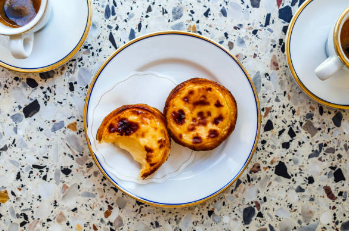
Hey foodies! I’m so excited to talk about one of my absolute favorite treats—the Portuguese egg tart. Oh my goodness, just thinking about that crispy, flaky crust and the creamy, tender custard inside makes my mouth water!
The Story Behind These Heavenly Tarts
So, where did these amazing tarts come from? Well, the Portuguese egg tart, or Pastéis de Nata, has a really interesting history. It all started in Portugal. The recipe is said to have come from the Jerónimos Monastery in Lisbon way back in the 18th century. The monks there used a lot of egg yolks for making the altar linens, and they needed to find a good way to use up the leftover egg whites. That’s when they came up with these delicious tarts.
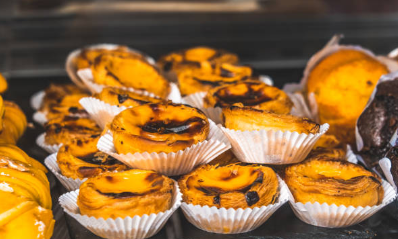
Over time, these tarts became super popular in Portugal. If you ever visit Portugal, you’ll see them everywhere—in bakeries, cafes, and on the streets. They’re like a little piece of heaven in your hand.
Making These Tasty Tarts at Home
Now, I know you’re probably wondering if you can make these tarts at home. And the answer is a big yes! The recipe might seem a bit tricky at first, but trust me, it’s totally worth it.
The Puff Pastry
First, you need to make the puff pastry. It’s best to do this the night before. You’ll need 1½ sticks of softened unsalted butter, 1¾ cups of all-purpose flour, ⅔ cup of water, and ¼ teaspoon of kosher salt. In a small bowl, whisk the butter until it’s like sour cream. Then, in a stand mixer with a dough hook, mix the flour, water, and salt. Keep scraping the bowl to make sure everything gets mixed well. The dough should be a bit sticky.
Next, put the dough on a floured surface and shape it into a 1-inch rectangle. Roll it out with a floured rolling pin to a ½-inch-thick rectangle that’s 10 inches long. Cover it with plastic wrap and let it rest for 15 minutes. After that, roll it into a 15-inch square. Spread a third of the butter on the bottom half of the dough, leaving a 1-inch edge. Fold the top half of the dough over the butter and press the edges to seal. Pat it with the rolling pin and roll it into another 15-inch square. Do this process two more times with the remaining butter. Finally, roll the dough into a tight log, wrap it in plastic wrap, and put it in the fridge overnight. It needs to get really firm.
The Filling
When it’s time to make the filling, preheat your oven to 500°. In a medium saucepan, mix 1 cup of granulated sugar, ⅔ cup of water, and a cinnamon stick. Bring this to a boil over high heat and let it cook for 1 minute. Then, take it off the heat and let it sit.
Now, take the dough out of the fridge. Cut the log into thirty ½-inch slices. Put each slice into an egg tart mold or a muffin tin, with the cut side of the spiral facing up. Press the center of the spiral into the bottom of the pan with your thumb, and flatten the dough against the bottom and sides. Refrigerate for 10 minutes.
In another small saucepan, heat 1 cup plus 1 tablespoon of whole milk until bubbles start to form around the edges. In a large bowl, whisk ½ cup of all-purpose flour with the remaining 5 tablespoons of milk. Then, slowly pour the hot milk into the flour-milk mixture while whisking. Next, pour the sugar syrup (without the cinnamon stick) into the milk-flour mixture. Put this back in the saucepan and cook over low heat, whisking all the time, until it thickens. This should take about 10 – 12 minutes.
Add 6 egg yolks to the thickened mixture and whisk until it’s all well combined. Strain the mixture through a fine-mesh sieve. Pour 1½ tablespoons of the warm filling into each pastry shell.
Baking the Tarts
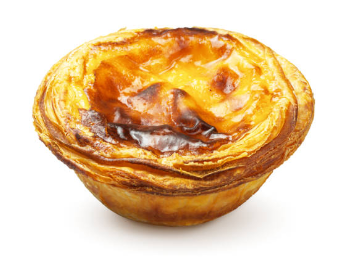
Put the tarts in the oven and bake until the shells are golden brown and crispy, the custards are set, and the tops have some blackened spots. This usually takes 15-20 minutes. Let the tarts cool in the pans on wire racks for 5 minutes. Then, take the tarts out of the molds, put them on the wire racks, and sprinkle some ground cinnamon on top. And there you have it—your very own Portuguese egg tarts, ready to enjoy!
Different Takes on Portuguese Egg Tarts
Portuguese egg tarts have traveled all around the world, and different places have their own twists on this classic treat.
In Hong Kong, the egg tarts are a bit smaller. They’re usually served in twos or threes. The custard filling can have different flavors like chocolate, green tea, or even bird’s nest. The outer shell can be made with pastry. These tarts were brought to Hong Kong from Guangzhou in the 1940s. At first, you could only find them in fancy Western-style restaurants. But in the 1960s, cha chaan tengs started selling them, and they became really popular with the working-class people in Hong Kong.
In Macau, the egg tarts have a caramelized, browned top. In 1989, a British pharmacist named Andrew Stow and his wife, Margaret Wong, opened Lord Stow’s Bakery in Coloane. They sold Portuguese tarts that were like the pastel de nata. In 1999, Margaret sold the recipe to KFC, and then these Macau-style tarts became popular in other parts of Asia, like Singapore and Taiwan.
So, there you have it, folks! The Portuguese egg tart is not just a delicious treat; it’s a part of history and culture. Have you ever tried making Portuguese egg tarts at home? Or have you had any unique variations of these tarts? Let me know in the comments below! I can’t wait to hear your stories.